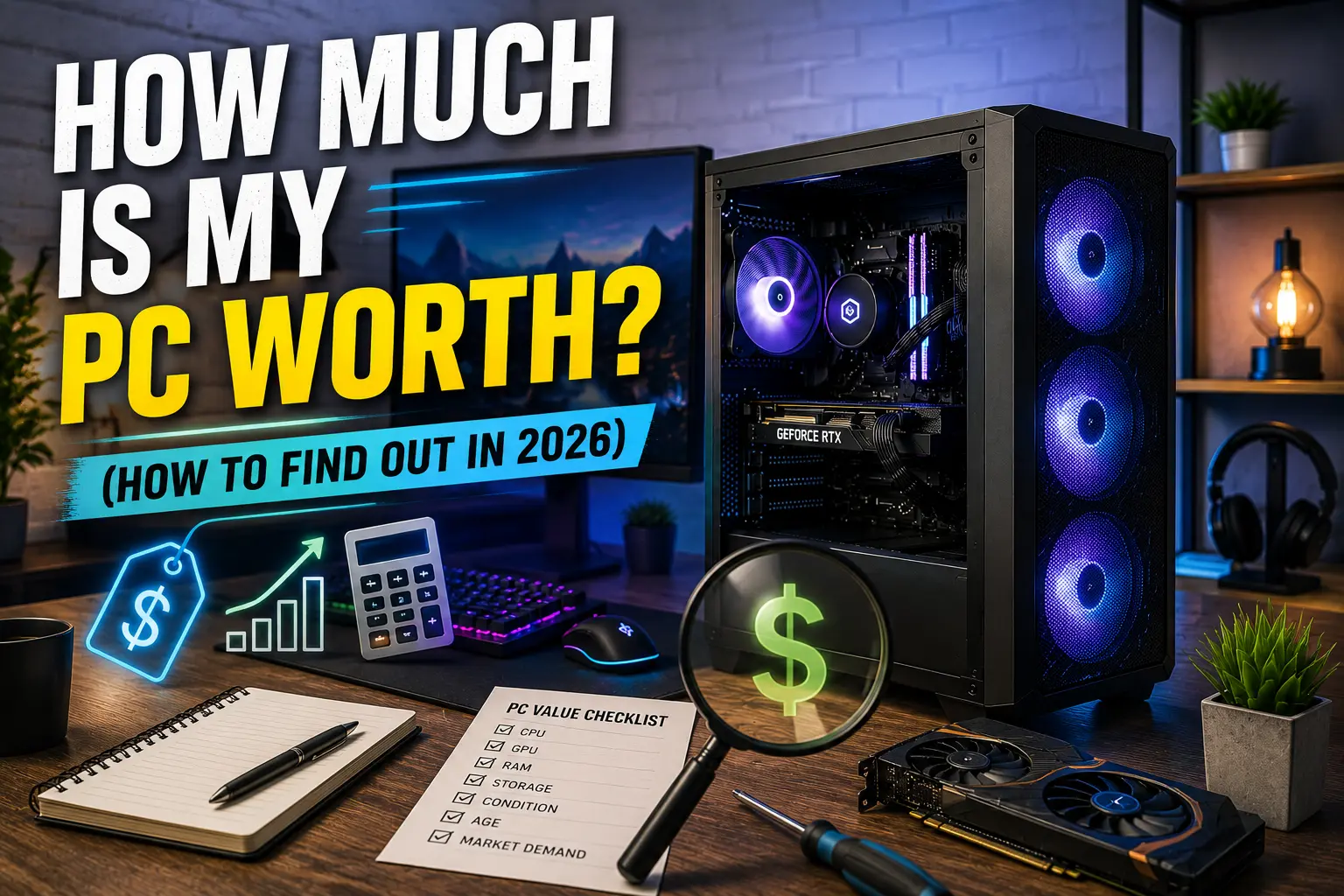
How Much Is My PC Worth? (How to Find Out in 2026)
How much is my PC worth? Most used gaming PCs sell for 40-70% of their original build cost, depending on age and condition. A two-year-old PC with mid-range parts in great shape typically keeps 55-65% of its value. The fastest way to get an exact number: price each component separately using current depreciation rates, then cross-check against real listings on eBay or Facebook Marketplace.
📢 Key Takeaways
- Used gaming PCs generally resell for 40-70% of their original cost.
- GPUs lose value the fastest, RAM and storage aren’t far behind, and CPUs hold value best.
- Condition, brand, and remaining warranty all shift your number up or down.
- Facebook Marketplace, eBay, and r/hardwareswap are the three main places to sell.
- Parting your PC out earns more money but takes more effort than selling it whole.
- Timing your sale around GPU launch cycles can change your price by 15-30%.
Your PC’s value comes down to four things: what parts are inside, how old they are, what shape they’re in, and where you sell them. That’s it. No secret formula, just simple math once you know the depreciation rates.
This matters more in 2026 than it used to. GPU prices have been unusually volatile this year, and that swing directly affects what your rig is worth right now compared to even six months ago.
This guide is for anyone selling a full gaming PC, trading one in, or just curious what their build is actually worth today. It works whether you’re planning to sell the whole system or break it into parts.
Here’s what’s covered: a step-by-step way to calculate your PC’s value yourself, how fast each type of part depreciates, what pushes your price up or down, where to actually sell, and how to time the sale for the best return.
How to Calculate What Your PC Is Worth (Step-by-Step)
Step 1: Price Each Component at Original MSRP
List out your GPU, CPU, RAM, and storage. Find what each one cost brand new, not what you paid on sale. MSRP is your starting point for every depreciation calculation that follows.
Step 2: Apply Depreciation by Part Type
Different parts lose value at different speeds. Multiply each component’s MSRP by the depreciation rate for its category and its age. A GPU bought two years ago at $600 MSRP, depreciating around 20% a year, is worth roughly $384 today before condition adjustments.
Step 3: Adjust for Condition
Add up your depreciated component values, then adjust for overall condition:
- Like New (with box/accessories): Keep close to 100% of the depreciated value
- Excellent: Keep 90-95%
- Good: Keep 75-85%
- Fair: Keep 55-70%
- Poor: Keep 35-50%
Step 4: Cross-Check Against Real Listings
Search eBay, Facebook Marketplace, and Craigslist for your exact GPU or CPU model. Pull 3-5 recent sold listings and average them. This catches anything your MSRP math misses, like sudden demand spikes or a part being harder to find used.
How Fast Do PC Parts Lose Value?
| Component | Typical Yearly Depreciation | Why |
| GPU | 15-25% | New generations launch often and outpace last year’s cards fast |
| CPU | 10-18% | Games lean more on GPU power, so older CPUs stay relevant longer |
| RAM | 20-30% | Generational shifts (like DDR4 to DDR5) push older kits down quickly |
| SSD/Storage | 30-40% | Price-per-gigabyte keeps dropping, and buyers are wary of used drive wear |
GPUs are almost always your biggest single loss. A card that cost $600 two years ago can realistically sit closer to $350-400 today, especially once a new generation launches at a similar price with better performance.
What Affects Your PC’s Resale Value Most
Beyond raw depreciation math, a few other factors move your final number:
- Brand reputation. Cards and boards from ASUS, EVGA, or MSI typically sell above no-name equivalents.
- Remaining warranty. A GPU with a year of manufacturer warranty left is worth more than an identical card with none.
- Platform relevance. Motherboards on current sockets (AM5, LGA1700) hold value better than older, discontinued platforms.
- Market timing. Prices dip right after a new GPU generation launches and firm up again a few months later.
- Physical condition. Dust, wear, and any cosmetic damage all get noticed and negotiated down.
If you’re weighing whether to sell now or wait, it helps to know what your money would actually buy today. A build in the best gaming PC under $500 range shows how far a smaller budget stretches right now if you’re planning to downgrade or fund a different setup.
Where to Sell a Used Gaming PC
| Platform | Best For | Trade-off |
| Facebook Marketplace | Local sales, no fees | Smaller buyer pool |
| eBay | Widest reach, buyer protection | ~13% seller fee |
| r/hardwareswap | Enthusiast buyers, fair pricing | Requires account history/karma |
Facebook Marketplace works best if you want cash in hand quickly with no shipping hassle. eBay reaches the largest audience but takes a meaningful cut of your sale price. r/hardwareswap tends to attract buyers who know exactly what they’re paying for, which usually means fairer offers for higher-end parts.
Should You Sell as a Whole PC or Part It Out?
Parting out your PC — selling the GPU, CPU, RAM, and storage separately — usually earns 10-20% more than selling the whole system at once. High-demand parts like a GPU or a recent Ryzen 7 chip sell especially well on their own.
The trade-off is effort. Parting out means multiple listings, multiple buyers, multiple shipments, and the chance a few pieces (like the case or PSU) don’t sell at all.
- Part it out if: you have high-value components and don’t mind the extra listings and shipping.
- Sell it whole if: it’s a budget-tier build, since buyers in that range want something ready to use immediately. This is often the case for anyone comparing your listing to a best prebuilt option at a similar price point.
When Is the Best Time to Sell?
Timing can shift your sale price by 15-30% either direction.
- Sell 2-3 months before a new GPU generation launches. Demand for current hardware is still high and prices haven’t started dropping yet.
- Sell during October through December. Holiday shopping brings more buyers into the market.
- Avoid selling right after a major launch. The used market floods with sellers upgrading, and prices drop fast.
Tips to Get the Highest Price for Your PC
- Keep the original box and accessories. This alone can add 5-10% to your final price.
- Clean the PC thoroughly before taking photos. A clean build photographs better and signals good care.
- Update drivers and BIOS, and reinstall the OS if selling the whole system. This proves everything works and saves the buyer setup time.
- Be upfront about any flaws. Honest listings get fewer disputes and build buyer trust.
- List on more than one platform if you have high-value parts, to reach more potential buyers.
Frequently Asked Questions
Conclusion
Your PC’s real value comes down to component age, condition, and where you choose to sell. Start with the MSRP-and-depreciation method above, then confirm it against a handful of real listings before you post yours. Time the sale right, and you can pick up an extra 15-30% for the same hardware.