RAM Prices in 2026: Why They’re So High and Should You Buy Now?
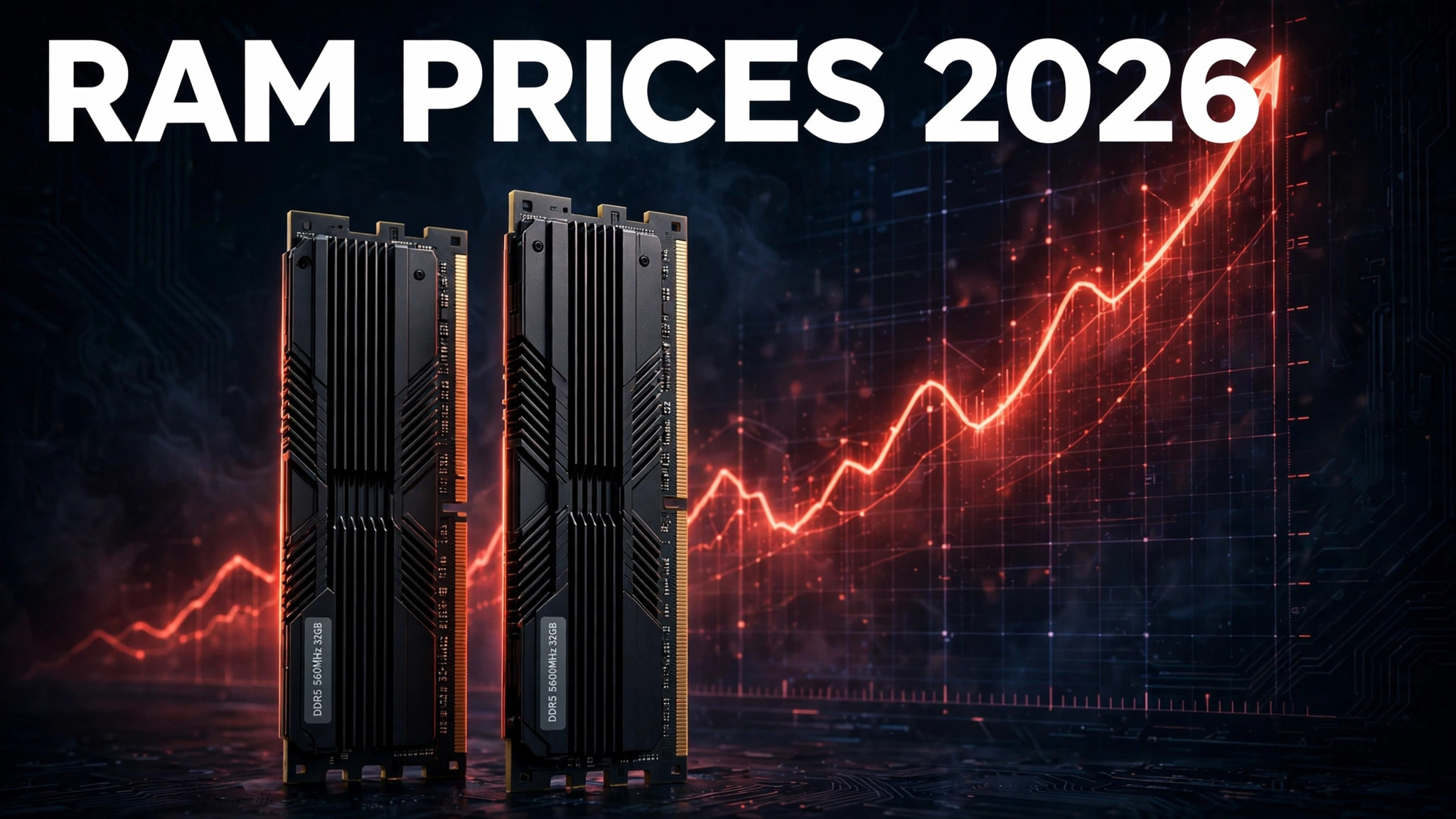
If you need RAM right now, buy it — don’t wait. RAM prices in 2026 are at record highs, and every credible industry forecast says they are likely to stay high through 2028. TechSpot, reporting a Jefferies Equity Research briefing in June 2026, noted that memory analyst Ethan Tan expects DRAM prices to keep rising through the rest of 2026, with no meaningful relief before 2028.
Bottom line: only buy RAM if you actually need it, buy the smallest capacity that realistically covers the next two to three years, and don’t postpone a needed upgrade hoping for a price crash — none of the current forecasts support that bet. This guide to RAM prices 2026 explains why kits cost so much, how long the crunch is expected to last, and whether you should buy now.
Should You Buy RAM Now or Wait?
It depends on why you’re buying. There are three scenarios, and the right move is different for each.
You need RAM now — a new build or a PC that won’t run without it. Buy it. TechTimes reported on October 8, 2026 that Kingston’s Cameron Crandall had already warned consumers back in December 2025 to buy without delay because prices would keep rising — and that call proved correct. Every forecast since has pointed to further increases, not a correction.
Your PC works fine and the upgrade is just “nice to have.” Waiting is defensible. If you’re on 16GB and everything you play runs smoothly, jumping to 32GB at crisis prices gains you little. But analysts cited by TechTimes (June 5, 2026) see no meaningful relief before late 2027 or 2028, so waiting means living with your current setup for a long time.
You’re buying as an investment or “just in case.” Don’t. Prices are volatile week to week, warranty and return windows expire, and a kit sitting in a drawer earns nothing. Spend the money only on RAM you’ll actually install.
Why Are RAM Prices So High in 2026?
The short version: the RAM in your shopping cart lost a bidding war to an AI data center.
Essentially all of the world’s DRAM is made by three companies — Samsung, SK Hynix, and Micron. In 2026 they have been pointing their finite wafer capacity at the most profitable product they make: high-bandwidth memory (HBM) for AI accelerators, plus high-density server memory. As TechTimes reported on October 8, 2026, these fabricators are shifting capacity to HBM because it earns far more per wafer than conventional DDR5, which tightens the supply of the consumer memory that ends up in desktop kits.
The factories aren’t broken — their output is simply being sold to hyperscalers under long-term AI contracts instead of to the consumer channel. TweakTown reported in June 2026 that wafer capacity is being prioritized for HBM, server DRAM, and enterprise SSDs over consumer memory, which is why desktop kits absorbed the worst of the squeeze.
There is also no quick supply fix coming. Jefferies’ briefing (via TechSpot, June 2026) put 2026 supply growth from manufacturing advances at only about 7–8% — nowhere near enough to offset the demand shift. And most new fab capacity coming online is being earmarked for AI memory, not consumer DIMMs, according to analysts cited by TechTimes (June 5, 2026).
One nuance: Kingston holds about 62% of the DRAM module market (TechTimes, October 8, 2026), but it’s a module assembler that buys its chips from the big three fabricators. It can’t control chip prices — it can only pass them through.
RAM Prices 2026: How High Have They Climbed?
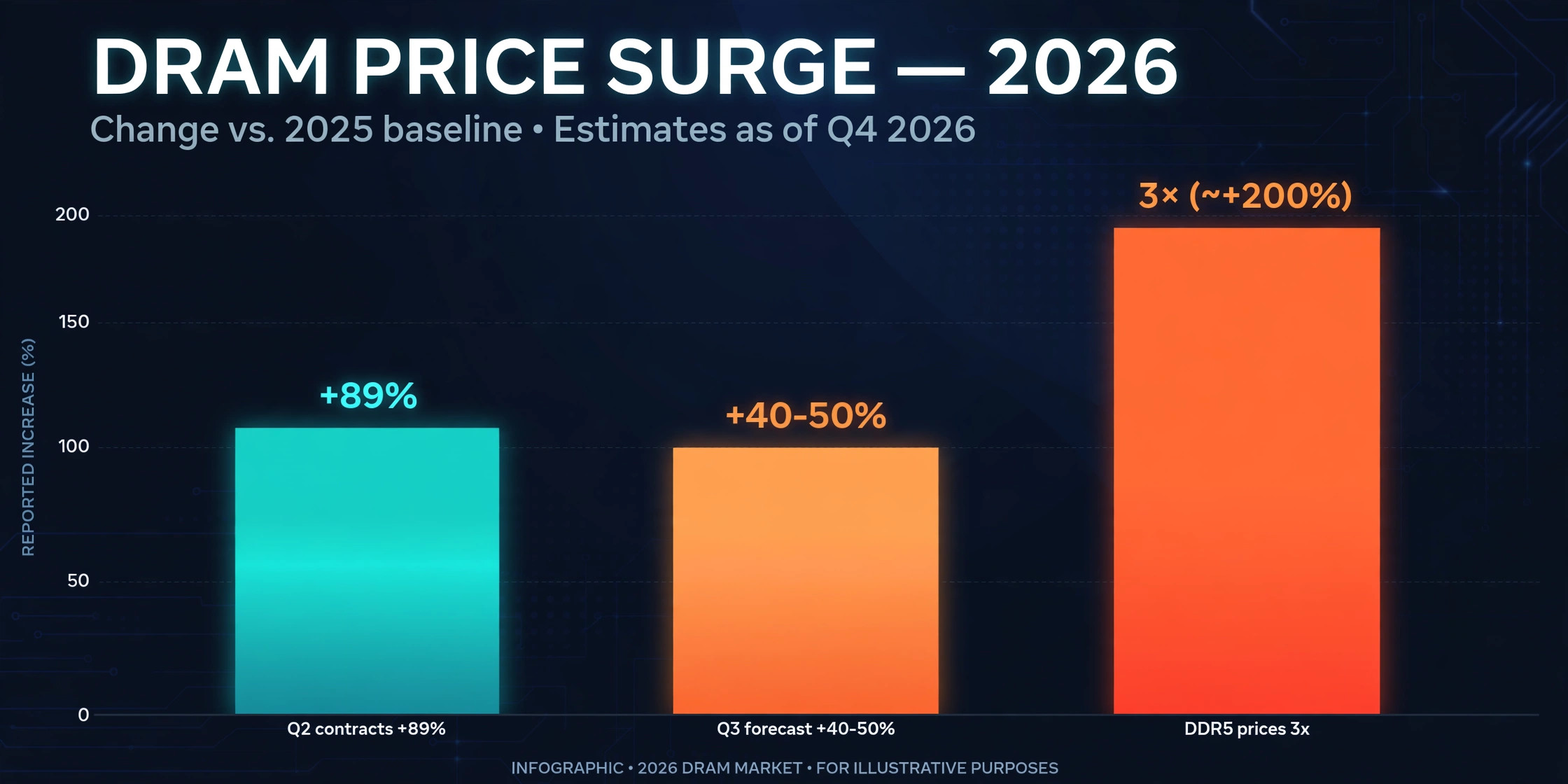
Every figure below is a reported market-level number, not a store price — retail prices vary by kit, retailer, and week.
| What was reported | Figure | Source |
|---|---|---|
| DRAM contract prices, Q2 2026 | Up as much as 89% in a single quarter | TweakTown, June 2026 |
| DRAM price forecast, Q3 2026 | +40–50% vs. the prior quarter | Jefferies briefing via TechSpot, June 2026 |
| DRAM price forecast, Q4 2026 | +30–40% vs. the prior quarter | Jefferies briefing via TechSpot, June 2026 |
| DDR5 street prices vs. pre-crisis | Roughly tripled | TechTimes, October 8, 2026 |
| Memory cost surge forecast | 130% | Gartner, via TechTimes, June 5, 2026 |
What this means: a kit that was a routine purchase in 2025 is now one of the most expensive parts of a mid-range build — sometimes rivaling the CPU or motherboard it plugs into. Budget for RAM like a major component, not an afterthought.
DDR4 vs DDR5 in 2026: Is DDR4 Still Enough?
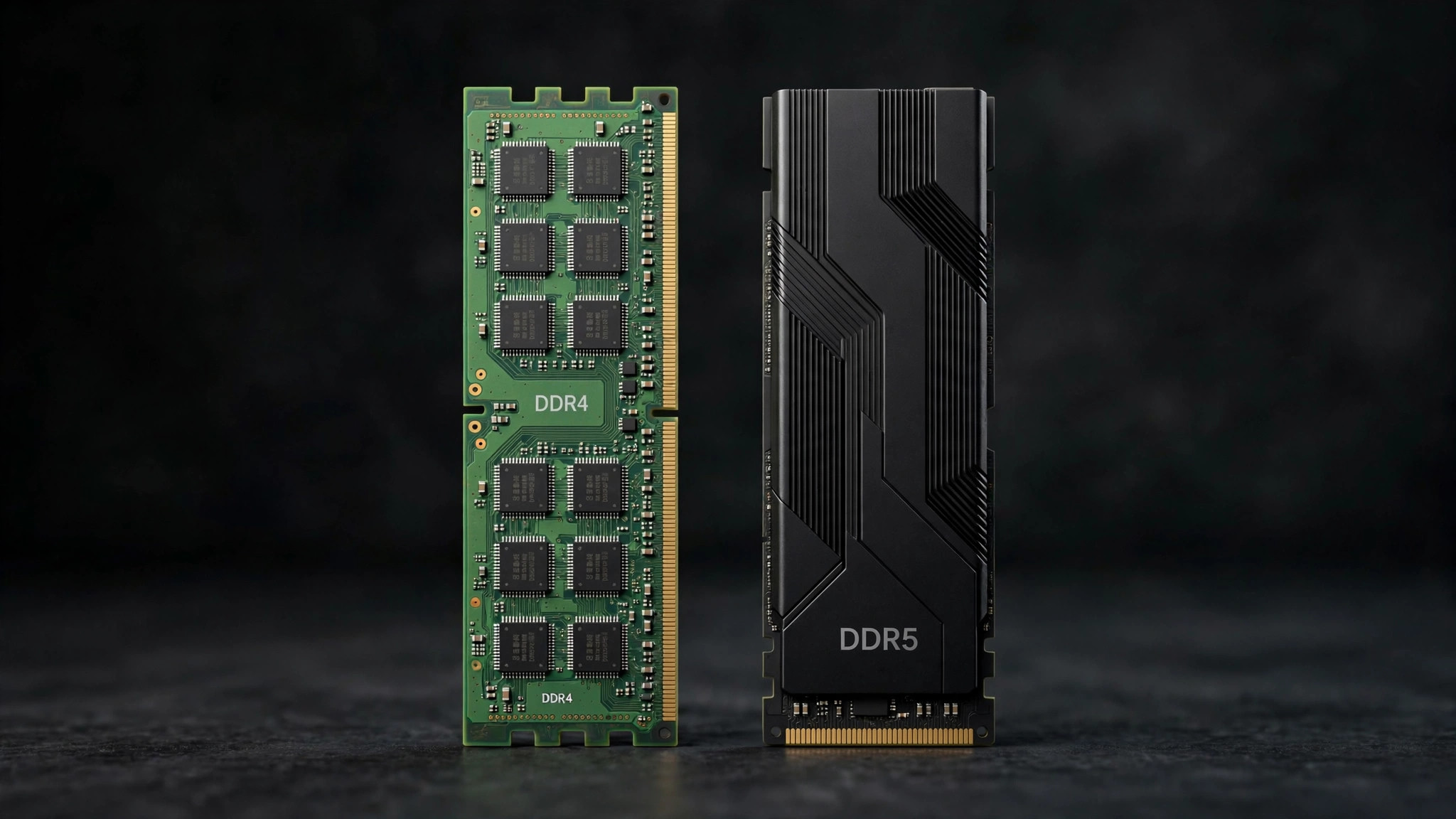
If you’re already on a DDR4 platform (AM4, LGA1700, or similar), DDR4 is still enough for gaming — a good DDR4 kit remains perfectly capable at 1080p and 1440p. TechTimes’ June 5, 2026 buying coverage suggests picking up remaining DDR4 stock if you’re staying on an older platform, because consumer DDR4 production has ended and remaining inventory will only get thinner.
But DDR4 is not the bargain escape hatch it looks like. With manufacturers winding down legacy production to free up capacity, DDR4 has entered what tech-insider.org (October 2026) called a “legacy rally” — quarterly price increases of up to 50%, with DDR4 in some cases briefly crossing DDR5 pricing per gigabyte. Don’t switch to DDR4 to save money on a new build; the discount you remember from 2024 is gone.
Match your RAM to the platform you own. On a DDR4 board, buy DDR4. Building new in 2026? Go DDR5 — TechTimes points to DDR5-6000 CL30 as the current value sweet spot on new platforms — because every new CPU platform is DDR5-only, and you don’t want to lock yourself into a dead standard at crisis prices.
16GB vs 24GB vs 32GB: Buying Advice During the Shortage
During a shortage, capacity is the lever that controls your exposure. The more gigabytes you buy, the more of the inflated market you buy into.
16GB is the minimum sensible buy in 2026. It’s enough for 1080p gaming, esports titles, and everyday multitasking (game + browser + Discord), and it keeps your spending — and your exposure to further price rises — as small as possible. If your workload fits in 16GB today, there is no crisis-driven reason to buy more. For the full breakdown of where 16GB holds up and where it doesn’t, see our guide on Is 16GB RAM Good for Gaming?
24GB is an awkward middle ground on desktop. It shows up in some laptop and CAMM2 configurations, but desktop kits are overwhelmingly sold as 16GB or 32GB pairs. In practice, choose 16GB or 32GB rather than hunting for an odd-size kit at a premium.
32GB is the buy-once sweet spot for new builds. It’s the right call for 1440p/4K gaming with heavy background apps, streaming, video editing, and anyone who wants the build to last three-plus years without a second RAM purchase. Yes, it costs more right now — but buying 16GB now and another 16GB later means buying into the inflated market twice. Our detailed look at Is 32GB RAM Good for Gaming? covers exactly which workloads justify it.
Whichever capacity you pick: buy a matched dual-channel kit (2 sticks), check your motherboard’s QVL compatibility list, and don’t pay a premium for extreme speeds — the real-world gaming difference between DDR5-6000 and DDR5-7200 is small, and the cheaper kit is usually the smarter kit during a shortage.
How Long Will RAM Prices Stay High?
The analyst consensus is unusually aligned: expect elevated prices through 2028. Jefferies (via TechSpot, June 2026) sees possible 15–20% easing in 2028 as supply expands and AI demand moderates. AMD warned at Computex 2026 that DDR5 prices won’t normalize until 2028, as reported by TweakTown. And analysts cited in TechTimes’ October 8, 2026 report expect the crisis to continue through at least 2028.
What this means: plan your purchases around a multi-year high-price environment, not a quick dip. If you’re building in 2026 or 2027, budget for expensive RAM the way you’d budget for an expensive GPU — it’s simply part of the build now.
Frequently Asked Questions
Why are RAM prices so high in 2026?
AI data centers need high-bandwidth memory (HBM), which is produced on the same fabrication lines as consumer DRAM. Samsung, SK Hynix, and Micron prioritize HBM and server memory because they earn far more per wafer, leaving less capacity for desktop DDR4/DDR5 kits. TweakTown (June 2026) and TechTimes (October 8, 2026) both report this capacity reallocation as the core driver.
Will RAM prices drop before the end of 2026?
Almost certainly not. The Jefferies briefing reported by TechSpot in June 2026 forecast DRAM prices rising another 40–50% in Q3 and 30–40% in Q4. Analysts cited across 2026 reporting agree that no meaningful relief arrives before late 2027 or 2028.
Is it worth buying DDR4 to save money in 2026?
Not reliably. Consumer DDR4 production has ended, and remaining stock has been rising fast — tech-insider.org reported in October 2026 that DDR4 quarterly price increases reached up to 50% in the “legacy rally.” Only buy DDR4 if you’re keeping an existing DDR4 platform; don’t build a new PC around it.
Should I buy RAM now or wait until 2027?
If you need RAM for a build or an upgrade you can’t postpone, buy now — forecasts point to higher prices through 2026, not lower. If your current setup runs fine and the upgrade is discretionary, waiting is defensible, but expect prices to remain elevated through 2027, with relief most likely in 2028.
Final Verdict
RAM prices in 2026 are high because AI demand rewired the memory market, and the people who make the chips have no financial reason to rewire it back soon. Buy only what you need, size it for the next few years, and match the memory to the platform you own. Still deciding how much RAM your gaming PC needs? Our guides on Is 16GB RAM Good for Gaming? and Is 32GB RAM Good for Gaming? will help you pick the right capacity before you spend crisis-era money on the wrong one.