What Is Smurfing in Gaming? (Explained)
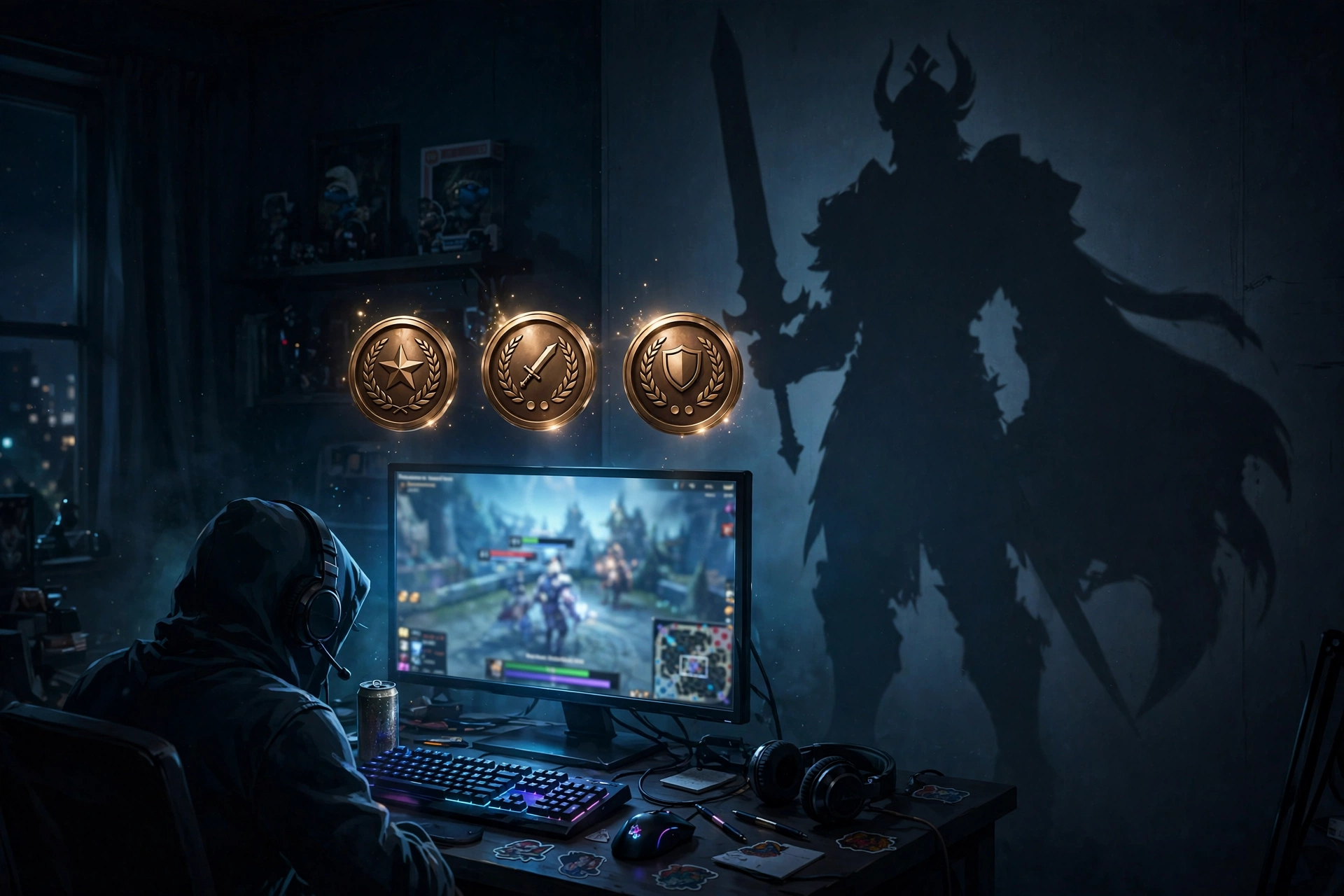
What is smurfing in gaming? It means an experienced, highly skilled player creates a new or low-ranked account to play against much weaker opponents. It is like a professional boxer signing up for a beginner tournament — the matches are never fair, and someone always ends up crushed.
You have probably been a victim of it. You queue into a “low-ranked” lobby in Valorant or League of Legends, and one player drops 30 kills while moving like a pro. That was not a talented beginner. That was a smurf. In this guide, we explain what smurfing is, where the term came from, why players do it, how it breaks matchmaking, and how games try to fight back.
Key Takeaways
- Smurfing = a highly skilled player on a new or low-ranked account, playing against weaker opponents.
- The term comes from 1990s Warcraft II, where two top players hid behind the account names “PapaSmurf” and “Smurfette”.
- Common reasons: playing with lower-ranked friends, practising new characters without risking a main rank, boosting friends, and — the toxic one — stomping weaker players for fun.
- It breaks matchmaking because the hidden skill rating on a fresh account does not reflect the player’s real skill, producing one-sided matches.
- Games fight back with smurf detection, rank-correction systems, and unlock requirements — but no fix is perfect.
What Is Smurfing in Gaming?
A “smurf” is the player doing it, and a “smurf account” is the low-ranked account they play on. Smurfing exists in every popular competitive game with ranked matchmaking — Valorant, League of Legends, Counter-Strike 2, Overwatch 2, Dota 2, and Rocket League all deal with it.
One important distinction: not every second account is smurfing. Many players keep an “alt account” that they play at their normal skill level — that is harmless. Smurfing specifically means there is a big gap between the player’s real skill and the rank of the account they are playing on. That gap is what makes matches unfair.
Where Did the Term “Smurfing” Come From?
The term dates back to the mid-1990s and the real-time strategy game Warcraft II: Tides of Darkness (released 1995). Two of the game’s best players, Geoff “Shlonglor” Fraizer and Greg “Warp” Boyko, were so dominant that opponents would refuse to play — or quit — as soon as they saw their usernames.
To get fair games, the pair created anonymous alternate accounts named “PapaSmurf” and “Smurfette”, after the cartoon characters from The Smurfs. Under those names, nobody dodged them, and they crushed lobby after lobby. According to gaming guides covering the term’s history, such as Flank.gg, players were already using “smurfing” to describe this trick by mid-1996 — and the name stuck for the next 30 years.
Why Do Players Smurf?
Not every smurf has the same motive, and the motive decides how much damage they do:
1. Playing with lower-ranked friends. This is the most common reason. Ranked queues restrict who can party together — a Diamond player usually cannot queue ranked with an Iron friend on their main account. A smurf account in the friend’s rank range solves that. The friend gets to play with their buddy, but the enemy team gets a Diamond player in disguise.
2. Practising without risk. A high-ranked player learning a new agent, champion, or role does not want to tank their main account’s rank. A smurf lets them experiment freely — but their “practice” opponents are real beginners trying their best.
3. Boosting or levelling friends’ accounts. Some players smurf on a friend’s account to push it to a higher rank. This is closely related to boosting, which almost every game bans outright.
4. Content creation. Streamers and YouTubers build “unranked to Grandmaster” series around smurf accounts. The videos are entertaining, but every episode is a trail of ruined lobbies.
5. Stomping weaker players. The toxic motive. Some players simply enjoy dominating people who cannot fight back. Gaming communities widely view this as unsportsmanlike — a study on gaming toxicity reported by IFLScience found that 69% of gamers admitted to smurfing at least sometimes, while 97% said they believe they play against smurfs. Most players hate it when it happens to them.
How Smurfing Breaks Matchmaking
Ranked games build fair matches using a hidden number — your MMR, which works like an ELO rating. The matchmaker pairs you with players whose number is close to yours, aiming for 50/50 games.
A smurf account starts with a fresh, low number that says “beginner” — while the human behind it plays like a pro. The matchmaker cannot tell the difference, so the smurf lands in lobbies full of genuine low-ranked players and wins easily. Each win raises the account’s hidden rating, but the correction is gradual, so dozens of lobbies get wrecked before the account reaches its true level.
The practical impact depends on which team the smurf lands on. Smurf on the enemy team: you lose a match you could never have won, which feels awful and teaches you nothing. Smurf on your team: a free win — but you did not earn it, and you learned nothing either. Either way, the match was decided before it started, and that is exactly what a rating system is supposed to prevent.
Smurfing vs Alt Account vs Boosting
Players often call every second account a “smurf,” but these are different things:
| Term | What it means | Fair or unfair? |
|---|---|---|
| Smurfing | Skilled player on a low-ranked account, facing weaker opponents | Unfair — the rank gap is the problem |
| Alt account | Second account played at the player’s real skill level | Fair — no rank deception |
| Boosting | Someone else plays on your account to raise its rank | Unfair — and bannable in most games |
What this means: intent and the rank gap are what make something smurfing. An alt account becomes a smurf account the moment a much better player uses it to farm weaker lobbies.
How Games Try to Stop Smurfing
Developers know smurfing drives new players away, so they keep adding countermeasures:
- Smurf detection. Valorant’s system tries to spot smurf accounts and moves them toward their true rank much faster than normal climbing would, limiting how many lobbies each smurf can ruin (Flank.gg).
- Unlock requirements. Overwatch 2 requires players to win 50 Quick Play matches before Competitive mode unlocks — a deliberate grind wall that makes creating throwaway smurf accounts tedious (Flank.gg).
- Bans and penalties. Some games ban accounts caught smurfing outright. As identity-verification company Sumsub notes in its guide to the practice, gaming companies increasingly treat smurfing as a form of cheating and deploy detection systems and penalties against it.
- Account gates. Phone verification and minimum account levels raise the cost of spinning up a fresh smurf account, so casual smurfs give up.
What this means for you: no countermeasure is perfect — determined players still get through. But the trend is clear: the easier a game makes smurfing, the more of it you will see, so stricter gates usually mean healthier low-rank lobbies.
Frequently Asked Questions
Is smurfing cheating?
Most games discourage it, and many treat it as against the rules — especially when it involves account sharing or boosting. Even where it is not explicitly banned, gaming communities widely view it as unsportsmanlike. When in doubt, check your game’s code of conduct.
Is smurfing bannable?
It depends on the game. Some titles ban accounts caught smurfing; others rely on detection systems that push smurfs to their true rank quickly instead. Boosting — playing on someone else’s account to raise its rank — is bannable in almost every competitive game.
What should I do if I think I am playing against a smurf?
Use the in-game report tool and move on — do not tilt-queue into the next match angry. Try to treat it as a learning game: watch what the smurf does differently (positioning, timing, aim) and steal one idea for your own play. You cannot control who queues into your lobby, only how you respond.
Does smurfing hurt the smurf’s own main account?
No — that is the whole point of a separate account. The main account’s rank stays untouched while the smurf account absorbs all the low-rank games. This is also why smurfing is hard to punish: the player’s “real” identity in the game is never at risk.
Final Takeaway
Smurfing is simple to define and hard to fix: a skilled player hides on a low-ranked account and farms weaker opponents. It ruins the fair matches that rating systems exist to create, and while games keep adding detection and unlock gates, the practice is not going away. If you want to understand the systems smurfs exploit, read our guides on ELO and MMR — the hidden numbers behind every ranked lobby.