Gaming Chair vs Office Chair: Which Is Better for Long Sessions?
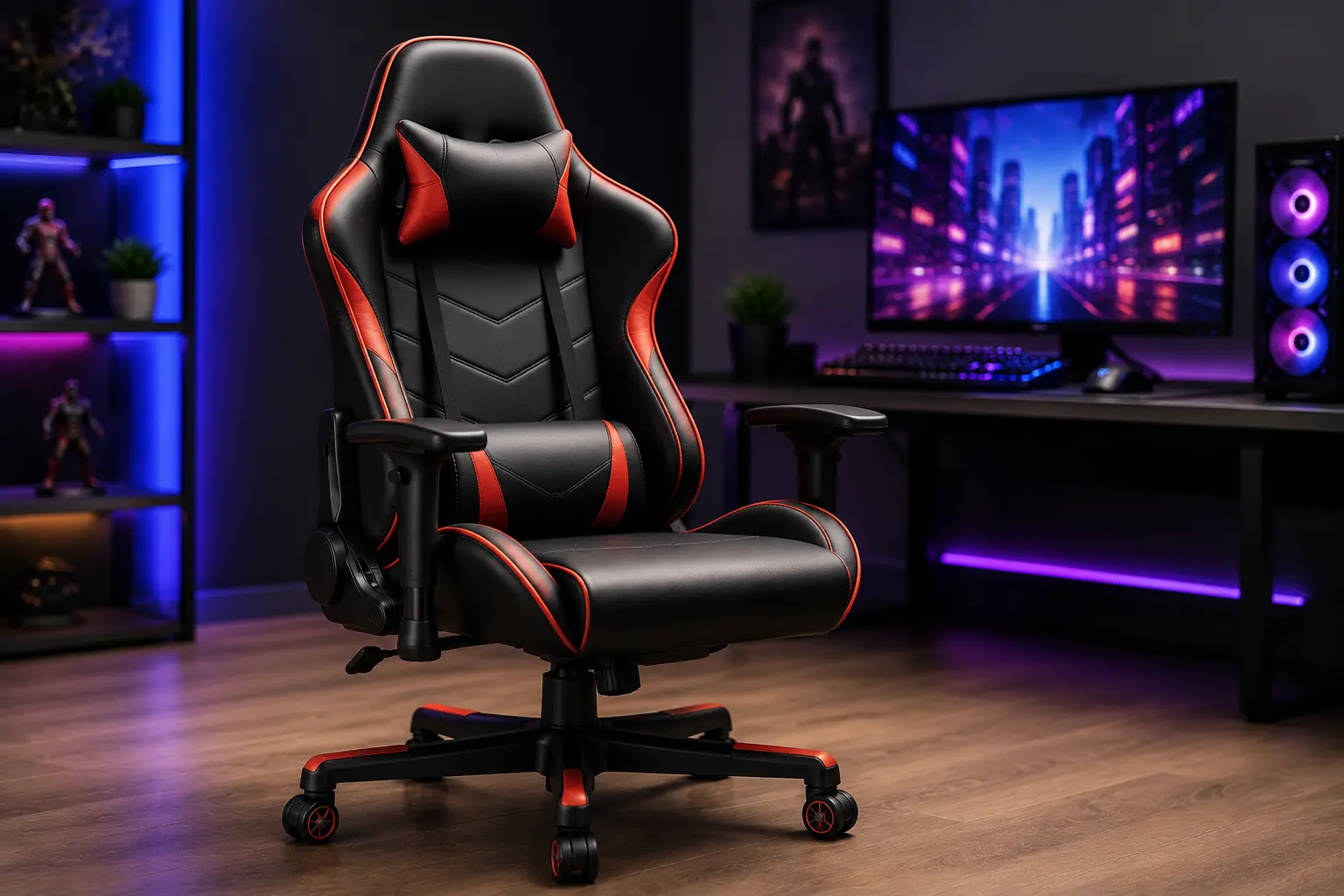
For sessions over 4-6 hours, an office chair generally wins on ergonomics, thanks to better lumbar support, seat depth adjustment, and tilt mechanisms built for upright focus. A gaming chair still makes sense if you spend most of your time reclined, streaming, or gaming rather than working, and you value the racing-style feel more than pure ergonomics.
A gaming chair vs office chair decision comes down to how your body actually sits during long sessions, not which one looks better in your setup photos. Office chairs are engineered around upright, focused posture. Gaming chairs are built around reclined comfort and immersion.
This matters more the longer you sit. A chair that feels great for a 90-minute gaming session can feel very different after 6 hours at a desk five days a week.
This guide is for anyone splitting time between work and gaming, or trying to pick one chair to handle both. Most guides give you a single blanket verdict. This one breaks it down by exactly how you use your desk, since the right answer changes depending on whether you’re gaming, working, or doing both from the same setup.
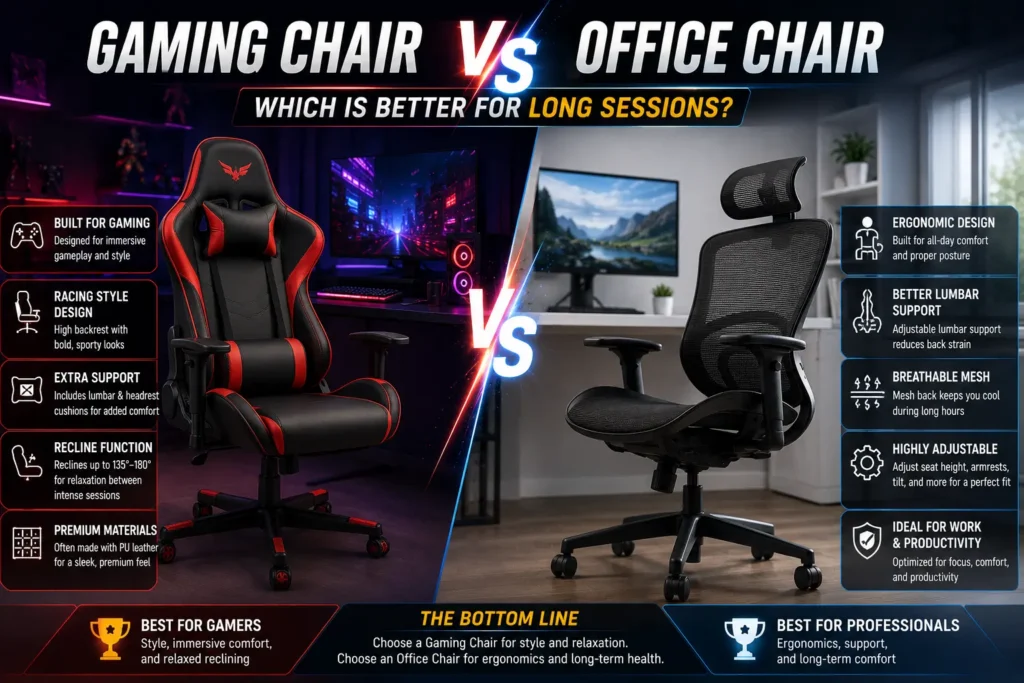
Gaming Chair vs Office Chair at a Glance
| Factor | Office Chair | Gaming Chair |
| Lumbar support | Adjustable, targeted | Often a pillow attachment, less precise |
| Seat depth adjustment | Common on ergonomic models | Rare |
| Recline range | Moderate, task-focused | Wide, often 135-180 degrees |
| Materials | Breathable mesh common | PU leather common, mesh on premium models |
| Typical lifespan | 7-10 years | 3-5 years |
| Price range | $150-$1,500+ | $200-$600+ |
Which Chair Is Better for Long Gaming Sessions?
Lumbar Support and Seat Depth
Ergonomic office chairs are built around adjustable lumbar support that moves to match your spine’s curve. Many also let you adjust seat depth, so the cushion doesn’t dig into the back of your knees during long sits.
Gaming chairs usually rely on a removable lumbar pillow instead of a built-in adjustable mechanism. It helps, but it’s a less precise fix than a chair engineered around your spine from the start.
Tilt and Recline Mechanisms
Office chairs favor task-focused tilt, keeping you upright and engaged for typing, meetings, or reading. Gaming chairs favor deep recline, sometimes 135 to 180 degrees, built for leaning back during cutscenes or breaks.
If your day is mostly upright, task-based work, the office chair’s tilt mechanism supports that posture better. If you spend a lot of time reclined while gaming or watching streams, the gaming chair’s recline range fits that use case more naturally.
Which Is Better for Long Sitting: Mesh or PU Leather?
Mesh backing, common on ergonomic office chairs, breathes better over long sessions. It’s a real advantage if you sit for hours at a time or live somewhere warm, since PU leather traps heat against your back.
PU leather, common on gaming chairs, looks sharper and matches a battlestation aesthetic well. The trade-off: it tends to crack or peel faster than mesh, especially on cheaper models, and it holds heat during extended sessions.
Premium gaming chairs increasingly offer mesh or hybrid fabric options now, closing this gap somewhat. If breathability matters more to you than the racing-seat look, check for a mesh or fabric version before assuming you need an office chair to get it.
Which Chair Lasts Longer: Gaming or Office?
Office chairs are typically built for 7-10 years of daily use. That’s the standard for commercial-grade components designed around constant, all-day sitting.
Gaming chairs typically target 3-5 years under heavy use. Premium brands have improved this in recent years with better frames and materials, but the average gaming chair still wears out faster than an equivalent-priced office chair.
If you’re sitting 6-plus hours a day, that durability gap matters for long-term cost. A $400 office chair lasting 8 years costs less per year than a $400 gaming chair lasting 4.
Should You Buy a Gaming Chair or an Office Chair?
This is where most guides stop short with one blanket answer. The right choice really depends on your actual session type, not just “gamer vs. office worker.”
Pure gaming (nights and weekends, not work): A gaming chair fits well here. You’re likely reclining more, sessions are shorter than a full workday, and the immersive feel adds real value.
If you’re putting together an affordable gaming setup, check out our Gaming Laptop Under $600 guide for the best budget-friendly laptops to pair with a comfortable gaming chair.
Work-from-home (6+ hours daily, mostly upright tasks): An office chair wins clearly. The adjustable lumbar support and seat depth matter more over a full workday than recline range or aesthetics.
Mixed streaming or hybrid setup (work during the day, gaming at night from the same desk): This is the hardest case. A well-reviewed hybrid chair, or a premium office chair with a deeper recline option, tends to serve this better than either extreme. Prioritize adjustable lumbar support first, since that matters across both use cases, and treat recline range as a secondary feature.
If you’re investing in a hybrid gaming and work setup, don’t overlook power protection. Our Best UPS for Gaming guide covers the best battery backup options to keep your PC running safely during outages.
What Mistakes Should You Avoid When Buying a Chair?
- Buying based on looks alone. A chair that matches your setup aesthetic but lacks real lumbar adjustment will hurt over long sessions.
- Assuming all gaming chairs are bad for posture. Premium models have closed much of the ergonomics gap; it’s the budget models that struggle most.
- Ignoring your actual daily use pattern. A gamer who also works from home has different needs than someone who only games on weekends.
- Skipping the recline range check. If you like leaning back during long sessions, a chair with limited recline will feel restrictive fast.
- Overlooking material for your climate. PU leather in a warm room makes long sessions noticeably less comfortable than mesh.
Frequently Asked Questions
Conclusion
For long sessions, the gaming chair vs office chair debate usually comes down to how you actually spend your time at the desk. Office chairs win for 6-plus hour workdays thanks to better lumbar support and durability. Gaming chairs still make sense for reclined, entertainment-focused sessions where immersion and recline matter more than pure ergonomics. If you’re splitting time between both, prioritize lumbar adjustability over aesthetics.