Is 1000 Mbps Good for Gaming? What You Actually Need to Know
A lot of gamers assume bigger numbers mean better gameplay. So when an ISP offers it, the question everyone asks is the same: is 1000 Mbps good for gaming, or just an easy upgrade that does not actually help?
But speed and smooth gameplay are not the same thing, and the gap between them confuses more people than it should. Marketing pages love to show gigabit plans next to action shots of competitive players, which makes the connection feel necessary even when it rarely is.
This guide breaks down what actually matters for internet speed for gaming, when 1000 Mbps gaming speed helps, when it does nothing, and how to pick a plan that fits how you actually play.
What Does 1000 Mbps Gaming Speed Really Mean?
1000 Mbps gaming speed refers to a gigabit internet plan, the kind most fiber providers now sell as their top tier. The number describes how much data your connection can move per second, not how fast your game reacts to your inputs.
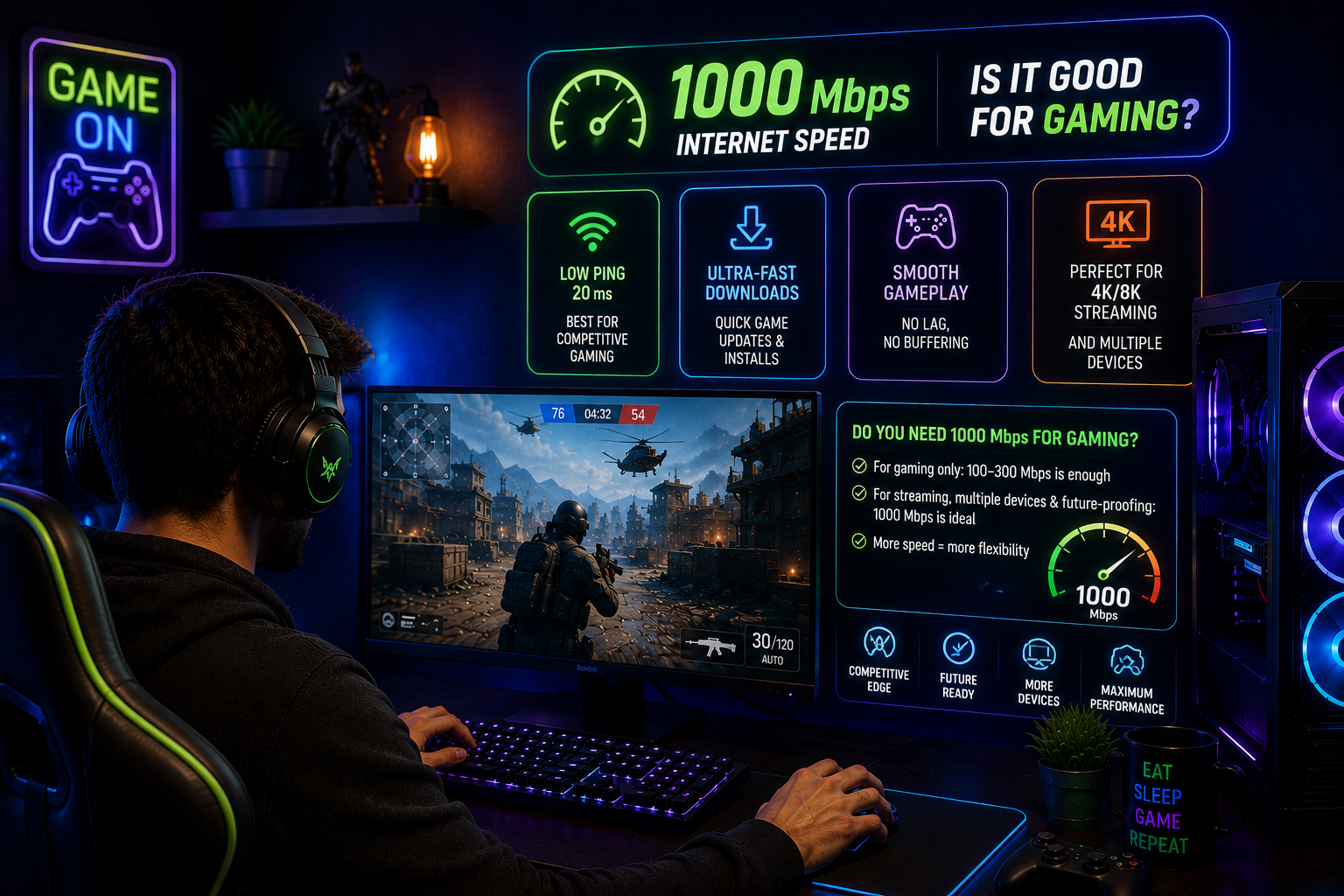
Here is the part most ads skip. Active gameplay barely uses any bandwidth at all. Most online games use less than 1 megabit per second during actual play, since the game is only sending small packets of movement and input data back and forth, not streaming video. A 1000 Mbps connection gives you more headroom than nearly any household will ever fill with gaming alone.
What 1000 Mbps Gaming Speed Actually Gives You
| Benefit | Does 1000 Mbps Help? |
|---|---|
| Lower ping during matches | No, ping depends on routing and distance |
| Faster game downloads and updates | Yes, significantly |
| Smoother gameplay for one gamer | No real difference over 50 Mbps |
| Supporting many devices at once | Yes, this is where it shines |
| Reduced lag spikes | Only indirectly, through stable infrastructure |
So What Is a Good Internet Speed for Gaming?
A good internet speed for gaming is lower than most people expect. Casual players do fine with 25 to 50 Mbps download speed, and even that includes plenty of room for patches and updates. Competitive players who also stream or run multiple devices can comfortably target 50 to 100 Mbps.
What actually decides your gaming experience is ping, jitter, and connection stability, not the top number on your plan. A 50 Mbps fiber connection with low ping will outperform a 1000 Mbps cable connection with high latency every time. This is the single most misunderstood fact in the entire conversation about gaming internet.
Is 300 Mbps Good for Gaming?
Yes, 300 Mbps is more than good for gaming. It sits well above what any single player needs, even during peak hours with downloads running in the background. At 300 Mbps, a 50GB game download finishes in minutes instead of hours, and you still have enormous headroom left for everything else happening on your network.
The only reason to go beyond 300 Mbps is a busy household. If three or four people are gaming, streaming in 4K, and video calling at the same time, the combined demand can stack up fast. In that case, more bandwidth prevents one activity from starving another, even though it still will not change your ping in any single match.
Speed Tiers and What They Cover
| Speed Tier | Best For |
|---|---|
| 25 to 50 Mbps | Single casual gamer |
| 50 to 100 Mbps | Competitive solo gamer, light streaming |
| 100 to 300 Mbps | Small household, multiple gamers |
| 300 to 1000 Mbps | Large household, heavy simultaneous use |
Not sure whether you really need gigabit internet? Our Is 500 Mbps Good for Gaming? guide compares real-world gaming performance to help you choose the right speed tier.
Does 1000 Mbps Lower Your Ping?
No, and this surprises a lot of people. Gigabit internet does not make individual data packets travel faster. Ping is shaped by your connection type, your distance from the game server, and how many network hops your data takes along the way, not by how wide your bandwidth pipe is.
Think of bandwidth as the width of a road and ping as the speed limit on it. A wider road lets more cars travel at once, but it does not let any single car go faster. Upgrading from 100 Mbps to 1000 Mbps adds lanes. It does not raise the speed limit. That is why a player on a 100 Mbps fiber line in the right city can have lower ping than someone paying for 1000 Mbps on an older cable network farther from the server.
Bandwidth controls how much data you can move. Latency controls how quickly each small piece of that data arrives. They are different problems with different fixes, and confusing the two is the most common mistake people make when shopping for a gaming plan.
What Is a Good Upload Speed for Gaming?
Upload speed gets ignored constantly, but it matters more than people think. What is a good upload speed for gaming comes down to what you do beyond just playing. For standard online play and voice chat, 3 to 5 Mbps upload is enough. Competitive players who stream their gameplay should aim for at least 10 Mbps upload, since streaming platforms need a steady upward flow of video data while the game itself is still sending its own input traffic.
Upload speed becomes critical the moment multiple uploads compete at once. Streaming while running voice chat and uploading clips at the same time can choke a low upload connection fast, even if your download speed looks excellent on paper.
Upload Speed by Use Case
| Speed Tier | Recommended Upload Speed |
|---|---|
| Casual online gaming | 3 to 5 Mbps |
| Gaming with voice chat | 5 Mbps |
| Streaming gameplay live | 10 Mbps or more |
| Streaming plus voice chat together | 15 Mbps or more |
Why Fiber Internet for Gaming Beats Cable at the Same Speed
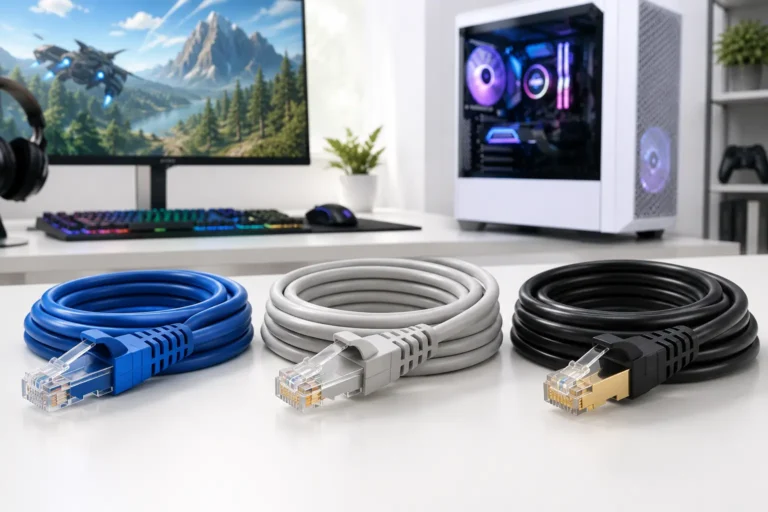
Fiber internet for gaming has a real advantage that has nothing to do with the speed number on the box. Fiber connections typically deliver symmetrical speeds, meaning upload and download are equal, while cable connections usually offer much slower upload than download even at the same advertised tier.
Fiber also tends to carry lower baseline latency because of how the signal travels compared to cable’s shared infrastructure. This is the real reason gigabit fiber plans often feel smoother than gigabit cable plans, even when both claim the same top speed.
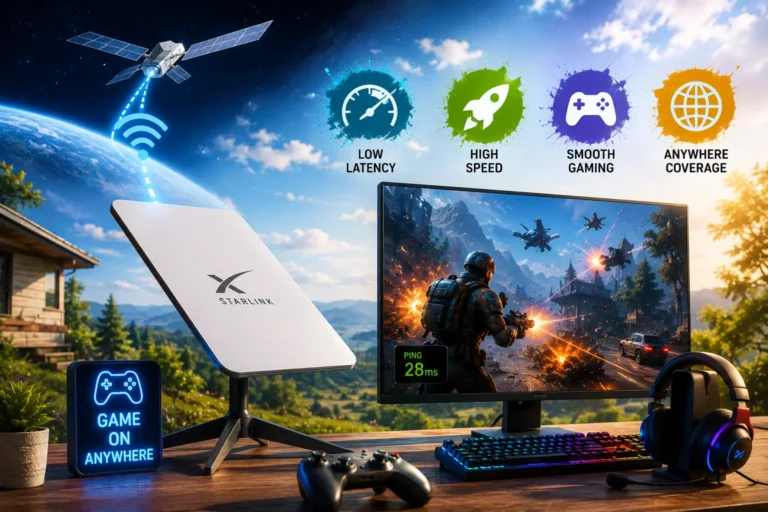
If fiber is not available in your area, a strong cable connection with good ping is still perfectly playable. Rural gamers should also check out our Is Starlink Good for Gaming? guide to see whether satellite internet is a good alternative for online gaming.
When 1000 Mbps Actually Makes Sense
Gigabit internet earns its price in specific situations. Large households with several gamers, streamers, and smart devices running at once benefit from the extra ceiling. Households that download massive game libraries or frequently install large updates will also notice the difference immediately, since a 100GB title can finish downloading in minutes instead of dragging on for an hour.
Think about a household with three gamers on separate consoles, one person streaming in 4K, and a handful of smart devices pulling small amounts of data in the background. That combined load can climb past 100 Mbps fast, and 1000 Mbps gaming speed gives enough breathing room that no single activity slows another down. This is the scenario where the upgrade genuinely pays off, not because any individual game needs that much bandwidth, but because many things are happening at once.
If you live alone and only play one game at a time, 1000 Mbps gaming speed is overkill you are paying for and likely never touching. Your money is better spent on a plan with strong, consistent latency than on a number you will never fully use during actual play.
Frequently Asked Questions.
Conclusion
1000 Mbps gaming speed sounds impressive, but raw bandwidth is rarely the bottleneck holding your gameplay back. Ping, jitter, and connection type matter far more than the number on your bill. A good internet speed for gaming is usually much lower than people assume, and the smartest upgrade is often fiber with low latency, not the biggest plan available.